How to Transport a Motorbike Safely
A step-by-step guide to preparing, loading and securing a motorbike for van transport, including ramps, straps, condition checks and access notes.


Need help arranging a van? Browse local drivers or send one quote request.
Safe Motorbike Loading, Strapping and Van Transport
Motorbike transport needs patience and the right setup. A bike can be damaged quickly if it is loaded badly, strapped wrongly or moved in a vehicle without enough space or suitable tie down points.
The key word is control. The bike should not be rushed up a makeshift ramp, leaned against loose cargo or held with tired straps that have seen better days. This step by step guide is for preparing a bike for collection and for understanding what should be agreed before a driver arrives. For the wider checks, it pairs with the motorbike transport overview.
Equipment that should be on the job
Before anything is loaded, it is worth knowing what a proper setup looks like, so you can ask the driver whether they have it.
A proper loading ramp rated for the weight of the bike.
Solid tie down points in the van, not just whatever is to hand.
Good quality ratchet straps, ideally with soft loops to protect the bars.
A wheel chock or front wheel support to hold the bike upright.
A spotter or second person for the ramp where the bike is heavy.
Blankets or padding to protect panels and fittings.
Step 1: describe the bike properly
Give the make, model and condition, whether it runs, whether it rolls, whether the tyres hold air, and whether there are leaks, loose panels or crash damage. A non running bike is a different job from one that rolls easily, and pretending otherwise tends to end badly on the ramp.
Step 2: check access
Tell the driver where the bike is kept. A garage with a flat driveway is very different from a rear garden, a basement, a steep slope, a gravel track, a locked yard or a narrow alley. The van needs room to stop safely and use a ramp. If the bike is at a workshop, auction house or seller’s property, provide contact names, opening hours, collection references and any release instructions.
Step 3: prepare the bike
Remove loose accessories where sensible
Check tyre pressure if the bike rolls
Disable alarms if needed and have the keys ready
Photograph existing marks and damage from all sides
Tell the driver about leaks, weak brakes or a flat battery
Make sure the bike is not blocked in behind other vehicles
Running and non running bikes on the ramp
A running bike that rolls under its own control is the easiest to load, because it can be walked up the ramp steadily with the engine off and the rider guiding it. A non running bike is harder: it may need two people, one steering and one pushing, and a bike with seized brakes or flat tyres can fight the ramp the whole way. Tell the driver honestly which you have, because the loading method, the number of people and the time all change. A seized or crash damaged bike is a specialist lift, not a quick roll up a plank.
Step 4: loading and securing
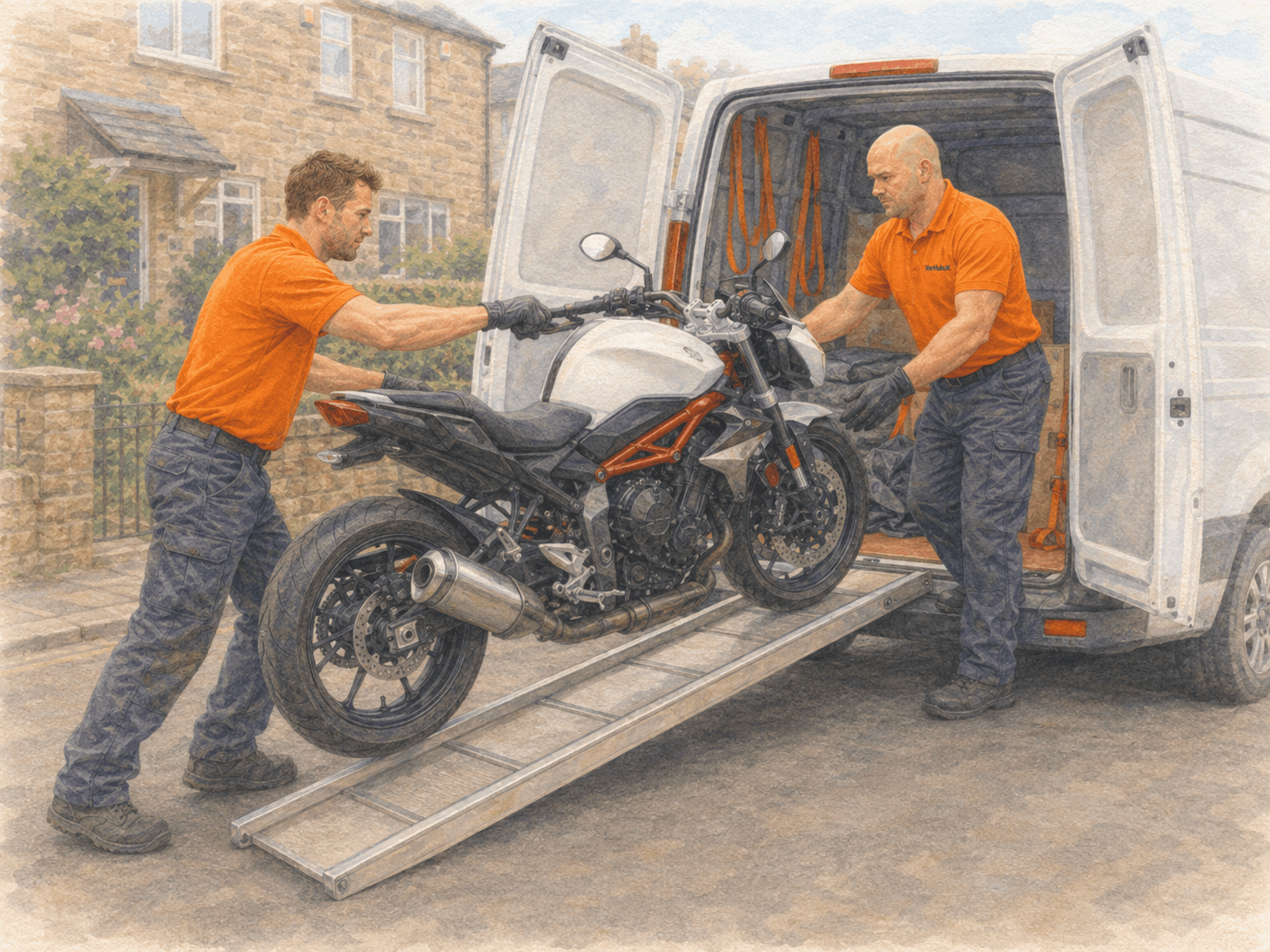
This is the part where damage happens if it is rushed. As a rough method, the bike goes up a secure ramp in a straight line, ideally with a spotter, into a wheel chock or supported upright. It is then strapped from balanced points front and rear so the suspension is gently compressed and the bike cannot shift, using soft loops to protect the bars and avoid pulling against mirrors or weak fittings. The aim is a bike held firmly without being cranked so hard it stresses the forks. You do not need to become an expert, but you should ask how the bike will be loaded and secured before accepting a quote.
Step 5: insurance and handover
Confirm insurance directly with the driver. Cover can vary, and higher value or modified bikes should be declared clearly. Take photos at pickup and delivery so the condition is recorded for both sides. If the job is part of a wider vehicle move rather than a simple bike collection, it may sit better under vehicle collection services.
Final point
The same care applies to related work like car transport, small vehicle transport for quad bikes or buggies, and vehicle recovery after a breakdown.
Motorbike transport is not a job to bodge with a plank and a couple of loose ropes. The right ramp, straps, vehicle and information all matter. Before accepting a quote, check load security, access, ramps, straps and cover, and confirm the actual loading method with the driver before the bike is moved. Availability depends on which drivers nearby are set up for bikes, so it is worth describing the job fully to find one with the right kit.
If you are in the area, compare drivers serving West Yorkshire for local cover.