Major Towns In
Tyne and Wear
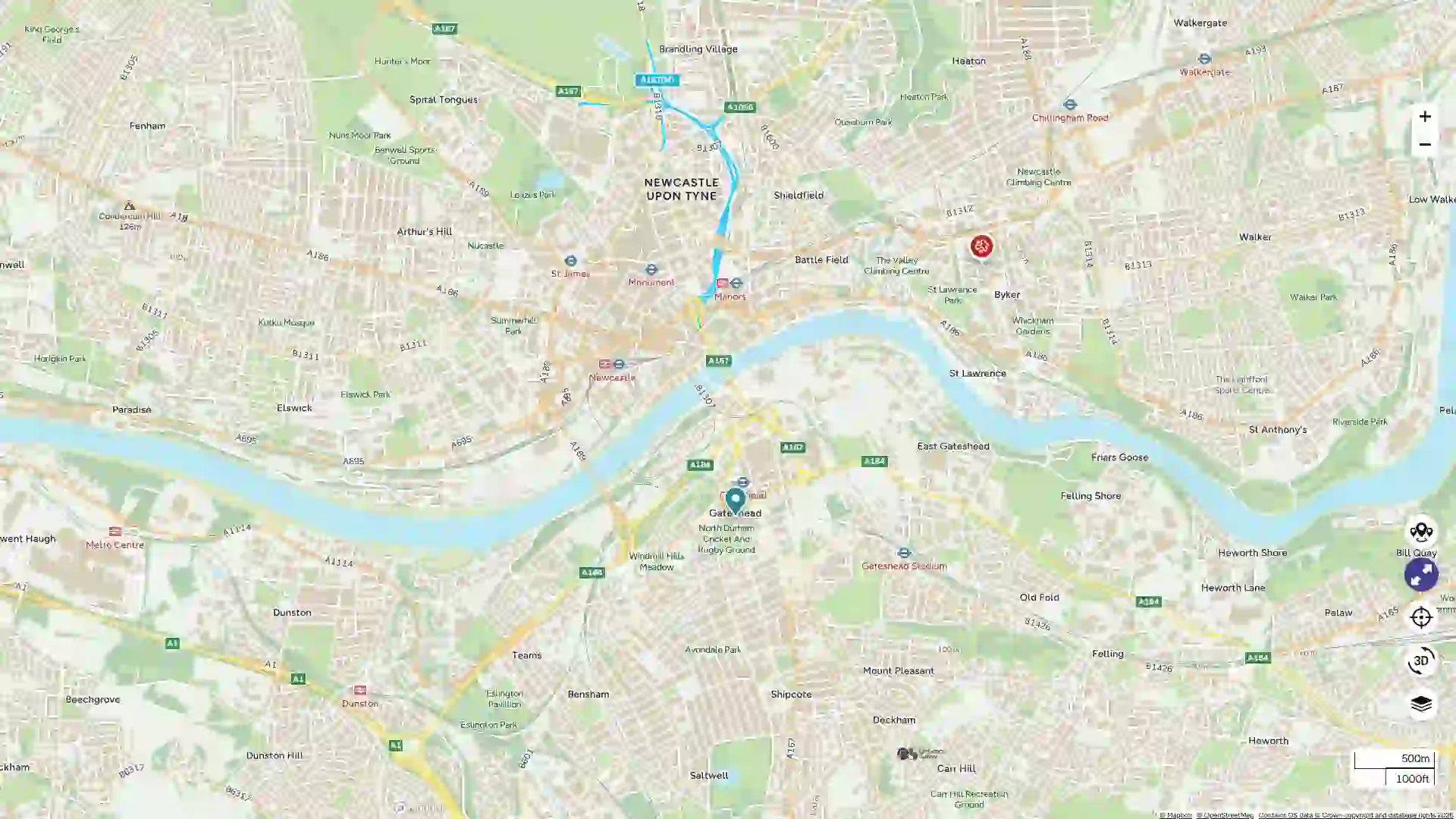
Select your area to see available drivers near you.
Neighbouring Counties

Featured Drivers in
Tyne and Wear
No Featured drivers here yet
Useful Information on
Tyne and Wear
Population
Major Towns & Cities
Major Routes
Tolls & Charges
Traffic Pinch Points
Ports & Freight Links
Urban / Rural Split
Universities & Colleges
Major Retail Areas
Man and Van Services in Tyne and Wear
Tyne and Wear is not a county where jobs sit neatly around one centre. It works as a linked urban county built around Newcastle upon Tyne, Gateshead, North Tyneside, South Tyneside and Sunderland, with a road and rail network that matters just as much as the postcode. Official ONS area facts confirm those five districts make up Tyne and Wear, and the North East transport strategy treats the area as one connected travel and freight system rather than a series of isolated towns.
That changes the work straight away. In Tyne and Wear, the issue is often not whether the van can reach the address, but whether the job sits in a busy choosing the right van size for city-centre access, a riverside route, an estate-heavy neighbourhood, or a suburban coastal or outer district where the loading is easier but the travel is longer. The North East Local Transport Plan and Rail and Metro Strategy both make clear that the county is shaped by major corridors, the Tyne and Wear Metro, and urban freight movement, which is exactly the sort of thing that changes how van jobs behave on the day.
Major Towns and Property Types in Tyne and Wear
The strongest county-level signal is that Tyne and Wear is genuinely multi-centre. Newcastle and Sunderland are the biggest urban anchors, but Gateshead, North Tyneside and South Tyneside all produce different kinds of work. Newcastle and central Gateshead bring denser apartment moves and mixed-use removal jobs. North Tyneside brings more suburban and coastal residential work, but still with pressure around major centres and Metro-served areas. South Tyneside mixes town-centre and port-side conditions with estate and residential jobs, while Sunderland combines city-centre density with wider suburban districts. The ONS area page and transport plan both support that multi-centre structure.
A strong local anchor is the Port of Tyne. The port’s own freight pages say it handles container freight, bulk cargo and automotive sectors, and offers warehousing, logistics and distribution services. That is a very practical signal because it means Tyne and Wear is not just about house moves and single item collections and furniture runs. It also supports port-linked freight handling, commercial deliveries, manufacturing-related transport and supply-chain jobs that are more time-sensitive and route-dependent than standard domestic work.
The other strong signal is the Tyne and Wear Metro. Official strategy material says the locally owned Metro provides key connectivity in the urban area, and widely available network information shows it links Newcastle, Gateshead, North Tyneside, South Tyneside and Sunderland. In practical terms, Metro-served areas are more likely to produce station-pressure parking, denser flat-based jobs and compact urban collections than outer residential streets that sit further from the rail and Metro network.
Road Access and Driving Conditions in Tyne and Wear
Tyne and Wear’s road pattern is one of the clearest practical signals in the county. The older and current transport-plan material both point to the A1, A19, A69 and Tyne Tunnel corridor as major strategic routes, and the newer regional plan keeps freight and network reliability at the centre of policy. That matters because a short county job can still be shaped by corridor pressure, tunnel traffic or peak congestion around major urban approaches.
A realistic Tyne and Wear scenario would be a flat move in central Newcastle or Gateshead where the route is simple enough but the actual stop is constrained by dense urban roads and city-centre servicing pressure. Another would be a run from Sunderland to North Tyneside or South Tyneside where the unloading at each end is easy enough, but the day is shaped by the A19, tunnel or cross-river traffic rather than the job itself. The regional transport strategy and delivery plan are useful here because they treat movement of goods as a major part of the network, not a side issue.
Cross-river movement is another key signal. The A19 and Tyne Tunnel are not just background infrastructure. They shape how jobs move between the north and south side of the county, especially when a route cuts between Newcastle, Gateshead, North Tyneside and South Tyneside. In practical terms, that means route planning in Tyne and Wear is often about crossing points and corridor timing, not just postcode distance.
Types of Van Jobs in Tyne and Wear
Tyne and Wear naturally supports a broad range of van work. In Newcastle, Sunderland and central Gateshead, the likely jobs include flat moves, part moves, storage and store-collection runs, furniture deliveries, commercial collections and contractor support jobs because these are the denser urban cores. Around Metro-served districts and city-centre corridors, jobs are more likely to be compact in mileage but slower in practice because of servicing pressure, access and parking constraints.
The county also supports a more suburban and domestic layer of work. North Tyneside and South Tyneside, along with outer parts of Sunderland and Gateshead, naturally produce fuller house moves where a man and van or removals firm must be weighed up, white-goods deliveries, garage and loft rubbish removal and clearance jobs and family relocations that need proper moving-day planning. On top of that, the Port of Tyne and wider logistics sector support a different kind of commercial demand, including distribution, warehousing-linked movement and private courier and business transport work. That is what makes Tyne and Wear stronger than a simple “urban county” label suggests.
Areas Covered Around Tyne and Wear
Newcastle upon Tyne
Gateshead
North Tyneside
South Tyneside
Sunderland
County Durham / Northumberland border routes
Jobs in Tyne and Wear often move between these centres rather than staying tightly local. The transport strategies repeatedly treat the county as one connected urban system, which matches the real working pattern: a collection in Gateshead may end in Sunderland, a flat move in Newcastle may feed out into North Tyneside, and a commercial delivery may run through the tunnel to South Tyneside. That networked structure is one of the county’s biggest practical signals.
Why Local Drivers Matter in Tyne and Wear
Tyne and Wear rewards local knowledge because it is easy to underestimate the network side of the job. A local driver is more likely to know which jobs are genuinely easy urban drops and which ones are shaped by river crossings, tunnel traffic, city-centre access or port-side activity. They are also more likely to understand the difference between a Newcastle city-centre collection, a Sunderland suburban house move and a logistics-linked job near the Port of Tyne. That local reading of the county is usually what keeps quotes realistic.
Opportunities for Van Drivers in Tyne and Wear
For drivers, Tyne and Wear can be strong territory because demand comes from several directions at once. There is dense urban residential work, city-centre and mixed-use servicing, suburban domestic work, Metro-linked activity and port and logistics demand. The downside is that weak planning gets punished quickly. A driver who prices only on postcode distance can lose time to corridor congestion, tunnel routes, urban servicing pressure or long cross-county runs. Drivers who understand where the work clusters and how the transport network shapes the day usually do much better.
Find a Driver in Tyne and Wear
If you need a move, collection, delivery or clearance in Tyne and Wear, the useful question is not just where the address is. It is whether the job sits in a city-centre corridor, a Metro-served dense district, a suburban residential area, or a port and logistics zone where timing and route planning matter more. Browsing local drivers and what to check before hiring a van driver works best when Tyne and Wear is treated as a connected urban county with very different operating environments inside it, not as one uniform area.
Sources
Let Us Find You a Driver
We still have access to drivers in the
town
area that have not yet signedup to the VanhubUK driver network. Let us
know what you need and we will source a local driver