Customer assistance hub
What Kind Of Waste are You Moving?
Need rubbish cleared, a single item taken away, or a full clearance? Tell us what you are dealing with and VanHub UK will look for a suitable independent provider. One important point: removing waste for payment requires valid waste carrier registration, so the provider will need to hold it to take your waste away legally.
How it works:
Submit your job details. We find suitable providers. You call to confirm cover and price. If you book, there's a small booking fee. Most jobs get quoted within 24 hours.
General Waste Collection

Start Here
Customer assistance hub
What Kind Of Waste are You Moving?
Need rubbish cleared, a single item taken away, or a full clearance? Tell us what you are dealing with and VanHub UK will look for a suitable independent provider. One important point: removing waste for payment requires valid waste carrier registration, so the provider will need to hold it to take your waste away legally.
How it works:
Submit your job details. We find suitable providers. You call to confirm cover and price. If you book, there's a small booking fee. Most jobs get quoted within 24 hours.
General Waste Collection
For sofas, wardrobes, appliances, beds, gym kit and other bulky items that will not fit in a car. Single item collection is the right call when the job is too big for a parcel courier but not big enough for a full removal.
It might be one piece bought from a seller, a wardrobe going into storage, or an item moving to a new flat. Tell us what you are moving, where it is going, and what the access looks like at both ends, and we will look for a suitable independent driver to handle it.
Start Here
Details That Help Drivers Quote Properly
The clearer these details, the more accurately a driver can quote. Have these ready when you send your job:
Pickup and drop-off postcodes
Distance affects time and fuel. A quick job can double once travel is added.
Item list with photos
Drivers need to know it fits the van. Photos beat guesswork every time.
Stairs or lift access
Stairs add time and effort. No lift to a third-floor flat changes the whole job.
Parking and loading access
Double yellows, permit bays, or a long carry from the door all affect timing.
Preferred date and time
Availability varies. Evenings, weekends, and short notice can cost more.
Lifting help needed
A solo driver cannot carry a wardrobe or fridge alone. Some jobs need two people.
Awkward or tight access
Loft hatches, basements, narrow doorways, and tight stairwells need planning.
Whether items are ready
Packed boxes and dismantled furniture load faster, which usually means a lower quote.
How we work
How to Request a Quote
The more accurate the request, the easier it is for independent drivers to judge the van size, lifting setup, timing and price.
01
Fill in the Booking Form
Give the drivers the details they need to quote on your job.

02
We Find Quotes
We will get back to you with the best quote

03
You Call The Driver
Call the driver to finalise details


Ready to describe the job?
Short editable closing paragraph that points customers toward requesting a quote.
Get a Quote
Rubbish removal and waste collection done properly
Waste removal is more regulated than an ordinary van job, and that regulation is there to protect you. Anyone carrying waste as part of a business should be properly registered and should be able to explain where the waste is going. It is worth checking this before you book, because a clearance can throw off a lot of mixed waste. If it is fly tipped, the trail can lead back to the household or business that handed it over.
That is the reason to be wary of a quote that looks far too cheap. Proper waste carrier registration and disposal checks cost money. A provider who undercuts everyone still has to take the waste somewhere, and if they are not dealing with it legally, the saving can turn into a problem for you. Ask where the waste goes after collection, ask for registration details, and for larger jobs ask about a waste transfer note or paperwork showing how the load was handled.
From a single item to a full clearance
General waste collection for household rubbish and bulky items covers everyday household and garden rubbish, old furniture, bags and bulky items that will not go in a normal bin round. House clearance for rooms, garages, lofts and whole properties is a bigger job, usually a mix of furniture, appliances and general waste, and it comes up most around an end of tenancy, a downsizing move or a probate clearance. Business waste disposal for trade, office and commercial waste handles jobs where the business carries its own legal duty of care for what it throws away.
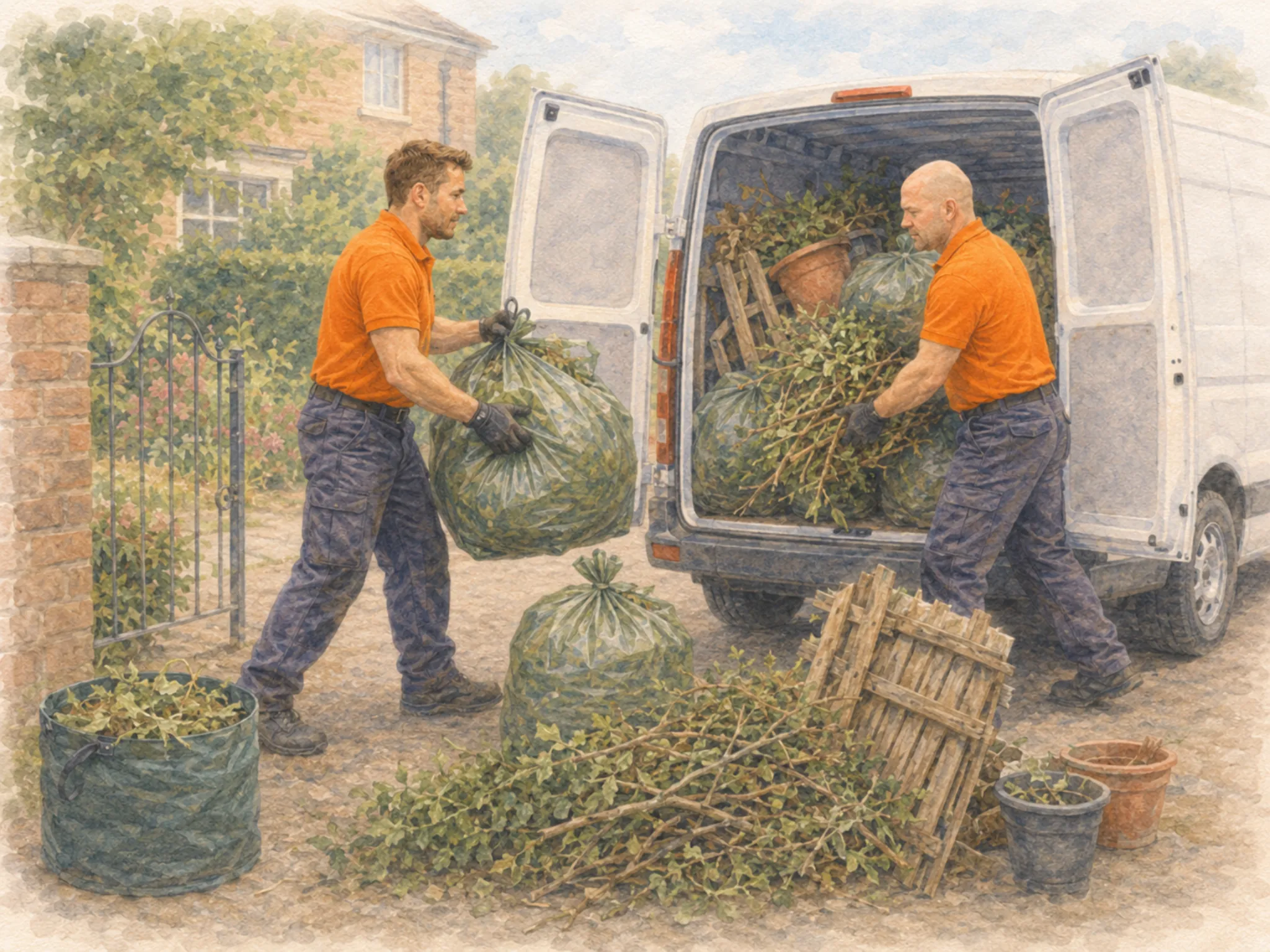
Some waste needs treating differently again. Garden and green waste collection for soil, turf, branches and hedge cuttings is heavy, bulky and has its own disposal rules. Hazardous waste collection guidance for chemicals, fluids and specialist materials is regulated work that only a properly set up provider should take on. If your job mixes types, say so, because it changes who can handle it and how it is priced.
How clearances are priced
The size of a waste job comes down to volume, the type of waste, and how easily it comes out of the property. A garage of mixed waste at street level with the door open onto a drive is straightforward. The same volume spread across an upstairs flat with no lift is a much bigger job. Heavy materials like soil and rubble are usually priced separately again, and the rubbish removal versus skip hire guide helps explain when volume, weight and disposal change the better option. A room by room idea of what needs clearing, with a few photos, lets a provider judge the loads and the disposal rather than guessing and adjusting on the day.
It also helps to sort in advance. Set aside anything you are keeping, mark it clearly, and pass on usable items to charity or a buyer where you can, since that reduces the volume heading for disposal. Photos of the pile, access and parking are useful too, especially where the provider has to carry waste through a house, down stairs, along an alleyway or out of a garden with no direct van access, especially on jobs closer to house clearance rather than simple rubbish removal.
What can and cannot be taken
Most household and garden waste, old furniture and general clutter is straightforward for a registered provider to remove. Some items are not. Certain electricals, fridges and freezers, mattresses, tyres, paint, chemicals and anything classed as hazardous have their own handling and disposal rules, which is why the items a man and van cannot usually collect guide is worth reading before asking for a quote. It is worth mentioning anything unusual when you ask for a quote, so the right provider takes the job rather than turning up and refusing half of it.
The duty of care point is worth repeating because it protects you. In England, you can check a carrier on the Environment Agency public register. In Wales, use the Natural Resources Wales waste carrier check. In Scotland, use the SEPA waste carriers register. A proper provider should not object to you checking.
Coverage and booking
VanHub UK can help customers find independent waste providers and suitable drivers across the UK, but waste jobs need the extra registration check before anything is agreed. Send what needs clearing, the rough volume, photos if possible, and any awkward items such as fridges, tyres, rubble, soil, paint or chemicals. We look for a suitable provider rather than treating every clearance as a normal van load.
The provider confirms the quote, registration position, disposal method and paperwork directly with you before the job goes ahead. If you would rather choose someone yourself, browse listed providers through the VanHub UK directory and contact them direct. Either way, checking the registration is not being difficult. It is the sensible step that protects you if the waste later ends up somewhere it should not.
Drivers are independent and local. You can compare drivers serving West Midlands or South Yorkshire van drivers, depending on where you are based.