Havering
From Romford market roots to the edge of Essex, Havering moves still span more ground than they first appear to.
Areas covered in This Borough

Useful Information on
Havering
Man and Van Services in Havering, London
Havering behaves differently from most London boroughs because it sits right on the outer edge of London and carries a much stronger suburban and Essex-border feel than inner boroughs do. Romford, Hornchurch, Harold Hill and Rainham can all produce very different types of jobs, and the borough’s own parking and transport material makes clear that access pressure tends to build around town centres, station roads and the main arterial corridors rather than across every residential street. The council says Havering has permit parking areas, controlled parking zones and restrictions, and that a CPZ controls all kerbside space either by waiting and loading restrictions or by designated parking spaces. VanHub UK works well in a borough like this because a Havering job is often easy or awkward depending on whether it sits in a station or town-centre zone, not just because it is in outer London. (London Borough of Havering)
The housing pattern also changes the job. Havering and Redbridge’s 2023 housing assessment shows Havering has far more houses than flats, with 42,916 semi-detached homes, 11,987 detached homes and 25,874 flats or maisonettes in the borough’s updated stock table. That is a very useful signal because it tells you Havering naturally produces more driveway-based house moves, loft and garage clearances, appliance deliveries and family relocations than a flatter, denser borough would. At the same time, the Local Plan and regeneration material point to focused growth in Romford and in the Rainham and Beam Park side of the borough, which means some parts of Havering are becoming more apartment-led and development-heavy than the broader suburban picture suggests. (London Borough of Havering)
Major Areas and Property Types in Havering
Havering’s strongest borough-level signal is the split between its more suburban house-led areas and its growth and corridor-led districts. The Local Plan identifies major growth around Romford, Rainham and Beam Park, and strategic development locations rather than evenly across the whole borough. That matters because Romford and Rainham-side jobs are much more likely to involve denser development, regeneration, mixed-use frontage and tighter access than places like Upminster, Cranham, Emerson Park or parts of Gidea Park, where larger semis and detached homes are more common. (London Borough of Havering)
Romford is one of the clearest local anchors because it behaves like a borough centre, not just a suburban district. The council’s Local Plan and Housing Action Plan both point to a Romford masterplan and central-area growth, while the Romford conservation and planning material shows a compact, town-centre form that naturally supports mixed-use deliveries, shop collections, apartment moves and more parking pressure than the rest of the borough. In practical terms, Romford jobs are more likely to be timed around bays, central traffic and shorter stopping opportunities than jobs in the wider suburban streets further east or south. (London Borough of Havering)
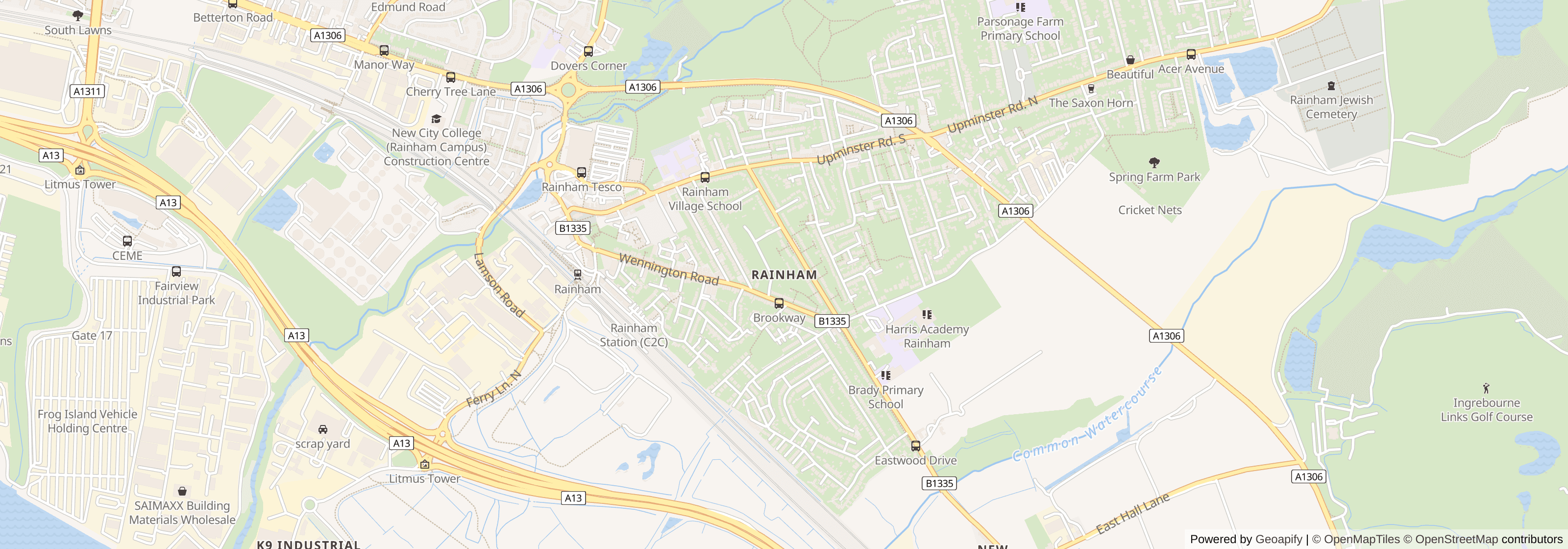
The second strong anchor is Rainham and Beam Park. Havering’s planning framework says the area is being guided for new homes, job opportunities, facilities and green space, and the council’s regeneration pages place it at the heart of the borough’s long-term agenda. That points to very real job patterns: contractor support work, new-build move-ins, furniture deliveries to apartment-led schemes, estate and industrial-edge access issues, and roads where development pressure is changing how easy the job is compared with the older suburban parts of Havering. (London Borough of Havering)
Road Access and Driving Conditions in Havering
Havering’s road network is one of the clearest practical signals in the borough. The council’s transport and active travel evidence says traffic is mostly concentrated on the four principal roads, the M25, A12, A127 and A13, with additional pressure on Romford Ring Road and Rainham Road. It also states that the A12, A13 and A127 form part of the Transport for London Road Network and provide access to Havering’s business, education and residential areas from London, Essex and Kent. In plain terms, that means Havering jobs are often shaped by major corridor traffic rather than by dense inner-London local street pressure. A short job near Romford or Rainham can still be slowed badly if it intersects one of those corridors at the wrong time. (Havering Democracy)
North-south movement is another important local signal. Havering’s older Local Implementation Plan says the private car remains the transport mode of choice partly because alternatives for journeys within the borough are weaker, particularly for north-south trips. That is useful because it explains why jobs in Havering often feel more spread out and less stackable than in denser boroughs. A move from Upminster to Romford or from Harold Hill to Rainham is still a single-borough job, but it behaves more like a longer suburban run than a compact urban one. (Havering Democracy)
Parking is the second big factor. Havering says CPZs and permit areas exist across the borough, that virtual permits are used for residents, businesses, visitors, deliveries, builders and home removals, and that bank holiday restrictions generally still apply, including yellow lines, resident permit areas and pay-and-display, except on Christmas Day. That is a strong operational signal because it means a driver cannot assume outer-London rules are loose or that a quiet-looking street near a station or centre is unrestricted. A realistic Havering scenario would be a Romford or Hornchurch collection where the borough looks spacious overall, but the actual stop sits inside a permit area with active bank holiday enforcement and limited legal loading space. (London Borough of Havering)
Types of Van Jobs in Havering
Havering naturally supports a broad range of van jobs, but the housing mix means it leans more domestic and house-led than many inner boroughs. Full house moves, garage and loft clearances, white-goods deliveries, store collections, garden-item transport and family relocations all make sense here because of the borough’s strong semi-detached and detached housing base. The council’s own design guidance also notes that two-storey semi-detached houses are especially typical in parts of Havering’s interwar stock, with wider block structures and side access to rear gardens. That is exactly the sort of detail that changes the practical handling of a move. (London Borough of Havering)
The borough still supports denser and more mixed-use work too. Regeneration in Romford and Rainham and Beam Park creates apartment move-ins, contractor jobs, mixed-use deliveries and commercial-linked transport that are less typical of the outer suburban neighbourhoods. The Local Plan and Housing Delivery material also point to at least 17,551 new homes over the plan period, which supports the case for long-term move-in, clearance and delivery demand rather than one-off suburban work alone. VanHub UK makes sense in Havering because the borough needs both straightforward house-move coverage and drivers who can handle centre and regeneration-area jobs properly. (London Borough of Havering)
Areas Covered Around Havering
Cross-borough work is normal in Havering because the borough sits on the eastern edge of London and connects strongly into Essex and Thames Gateway routes. Romford and Harold Hill naturally pull toward Redbridge and Brentwood-side movement. Rainham and Beam Park have a stronger practical link toward Barking and Dagenham, Thurrock and the wider A13 corridor. That cross-boundary pull is reinforced by the borough’s own transport evidence, which repeatedly points to the A12, A13 and A127 as the main strategic corridors. (London Borough of Havering)
Why Local Drivers Matter in Havering
Havering rewards local knowledge because the borough can look easier than it really is. A local driver is more likely to know which addresses are genuinely simple house-led jobs with easy frontage, and which ones sit in station or town-centre permit zones where the loading pressure is much tighter. They are also more likely to understand the difference between a Romford centre job, a Rainham and Beam Park regeneration job, and a larger house move in Upminster or Emerson Park. That is why VanHub UK works here. The borough is too mixed for a generic “outer London” assumption to be useful. (London Borough of Havering)
Opportunities for Van Drivers in Havering
For drivers, Havering can be strong territory because it combines easier suburban domestic work with focused growth areas that create repeat commercial and apartment-led demand. The main opportunity lies in understanding where the borough changes character. Drivers who treat all of Havering like relaxed driveway territory will lose time in Romford, station zones and regeneration areas. Drivers who treat the whole borough like a tight inner borough will overcomplicate straightforward suburban house work. The ones who do well are usually the ones who understand how the A12, A127 and A13 corridors, town-centre growth and the borough’s very house-led stock pattern interact. (Havering Democracy)
Find a Driver in Havering
If you need a move, collection, delivery or clearance in Havering, the useful question is not just which postcode it is. It is whether the job sits in an easy suburban street, a station or town-centre permit area, or one of the borough’s growing regeneration zones. That usually decides whether the booking is simple or awkward. VanHub UK helps customers browse local drivers and request quotes from people who understand those Havering-specific differences from the start. (London Borough of Havering)


